

How to Prevent Horse Eye Sunburn: Complete Protection Guide
Table of Contents
- Understanding Equine Eye Sunburn and UV Damage
- Signs of Horse Eye Sunburn: What to Watch For
- Fly Mask With UV Protection: Your First Line of Defense
- Managing Equine Uveitis and Light Sensitivity
- Stabling, Shade, and Turnout Strategies
- Sunscreen and Topical Protection for Horses
- Additional Protective Measures and Year-Round Care
- Frequently Asked Questions
Last Updated: September 20, 2026
Understanding Equine Eye Sunburn and UV Damage
Horses face real risk from ultraviolet radiation. Their eyes lack protective pigmentation, and prolonged UV exposure causes discomfort, inflammation, and photokeratitis. Understanding how to prevent horse eye sunburn protects your horse's vision and comfort during outdoor activities.
When horses spend hours in bright sunlight without protection, UV rays penetrate the cornea and trigger photokeratitis, sunburn of the eye surface. Horses with light-colored eyes, pink skin, or equine recurrent uveitis face greater risk.
Damage may appear within hours or develop over weeks of unprotected turnout. Protection requires layered strategies: UV-blocking fly masks, shade management, and topical support.
Pro Tip
Horses with blue eyes or light pigmentation around the eyes need UV protection year-round, even on cloudy days. UV rays penetrate clouds, so consistent protection matters more than sunny-day-only coverage.
Signs of Horse Eye Sunburn: What to Watch For
Early signs include excessive squinting, tearing, redness around the eyelids, and sensitivity to bright light. Your horse may avoid sunlight or show reluctance to go outside during peak hours.
Severe cases show swelling, crusting, discharge, or corneal cloudiness. If you notice these symptoms, provide immediate shade and seek veterinary evaluation.
Horses with equine recurrent uveitis show heightened UV sensitivity, with excessive tearing, abnormal pupil constriction, or corneal haziness. UV protection is essential to their daily comfort and long-term eye health.
Watch for these warning signs:
- Squinting or keeping eyes partially closed outdoors
- Excessive tearing or discharge
- Redness or swelling of the eyelids
- Reluctance to go outside or face bright light
- Head turning to avoid direct sunlight
- Cloudiness or haziness in the eye
Watch Out
If your horse shows signs of severe eye inflammation, discharge, or vision changes, contact your veterinarian immediately. Some conditions require medical treatment beyond UV protection alone.
Fly Mask With UV Protection: Your First Line of Defense
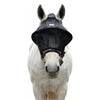
A UV-protective fly mask is your horse's primary defense against insects and UV rays. The best masks combine fly exclusion with integrated visors that block ultraviolet radiation while maintaining visibility and airflow.
Material Science of UV-Blocking Fabrics
Standard mesh fabrics block only 10-30% of UV rays. Specialized UV-blocking fabrics achieve 80-95% protection through tight-weave construction, UV-absorbing pigments, or reflective coatings.
Three mechanisms achieve higher protection: tight-weave construction (50-70% blocking), UV-absorbing pigments like titanium dioxide (80-95% blocking with better airflow), and reflective coatings (very high blocking but prone to degradation).
High-quality masks combine tight weave and UV-absorbing pigments to achieve 95%+ UV blocking. Look for masks that specify the UV blocking percentage and testing methodology.
How to Verify UV Protection Claims
Look for masks tested to ASTM D6603 standards with a UPF (Ultraviolet Protection Factor) rating of 50+, indicating 98% UV blocking. Reputable manufacturers cite their testing methodology.
TUFFTEQ Fly Masks: Material and Design
TUFFTEQ fly masks feature built-in visors providing 95% UV protection through high-grade nylon and mesh construction, reducing glare while shielding the eye area from direct sun exposure.

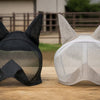
TUFFTEQ offers three options: the Plus-Size Horse Fly Mask Without Ears (95% UV protection, earless design), the Horse Visor Fly Mask With Ears (comprehensive eye coverage), and the TUFFTEQ 100% UV Eye Protection - Horse Fly Mask Visor for Riding & Recovery (lightweight, attaches to halters or bridles).
Quality UV-blocking fly masks feature: 95% UV blocking, integrated visor, breathable mesh, secure fit, durable materials, easy maintenance, and adequate visibility for grazing.
Durability and UV Degradation
UV-blocking fabrics degrade over 1-2 seasons. Store masks indoors, wash with mild soap, and avoid harsh chemicals. Replace masks showing visible wear or when your horse squints more, signs of compromised protection.
TUFFTEQ 100% UV Eye Protection – Horse →
Pro Tip
Invest in a quality UV-blocking fly mask as your primary sun protection tool. The material science is real: a 95% UV-blocking mask with UV-absorbing pigments will protect your horse's eyes far more effectively than a standard mesh fly mask, even if both look similar at first glance.
Managing Equine Uveitis and Light Sensitivity
Horses with equine recurrent uveitis need consistent UV protection to prevent inflammation flare-ups. Use a high-quality UV-blocking fly mask paired with strategic stabling during peak sun hours and shade access during turnout. Work with your veterinarian to monitor your horse's response; UV protection directly impacts uveitis progression.
Key Takeaway
Horses with uveitis need UV protection as part of their medical management strategy, not just as comfort enhancement. Consistent sun protection can reduce inflammation flare-ups and improve long-term eye health outcomes.
Stabling, Shade, and Turnout Strategies
Physical barriers provide essential backup to fly masks and sunscreen. Strategic use of stabling and shade access dramatically reduces cumulative UV exposure over time. Horses need access to shade during peak sun hours, typically 10 a.m. to 4 p.m. when UV intensity peaks.
Ideally, your paddock includes a run-in shelter or tree coverage. These natural shade sources allow horses to self-regulate sun exposure while maintaining turnout time. Horses with light-colored faces or documented photosensitivity benefit from access to covered shelters even during morning and evening hours.
Stabling during peak sun hours works well for horses with severe light sensitivity. A dark stall provides complete UV protection while allowing your horse to rest comfortably. This approach requires careful management to prevent behavioral issues from excessive confinement, but for horses with uveitis or severe photophobia, it's often necessary.
Consider your horse's daily schedule when planning shade access. Horses that graze early morning and late evening experience less intense UV exposure than those turned out midday. Adjusting turnout times to avoid peak sun hours provides meaningful protection without requiring full-time stabling.
Effective shade and stabling strategies:
- Provide run-in shelter or tree coverage in paddocks
- Limit peak-hour turnout (10 a.m. to 4 p.m.) for sensitive horses
- Use dark stalls for horses with severe photosensitivity
- Rotate stabling and turnout to balance exercise and protection
- Install shade cloth over paddock areas if natural shade is limited
- Monitor your horse's comfort and adjust schedules accordingly
Sunscreen and Topical Protection for Horses
Equine sunscreen provides targeted protection for exposed areas that masks don't cover. Apply sunscreen to the muzzle, around the eyes, and on any pink or unpigmented skin. Choose products formulated specifically for horses, as human sunscreen can pose serious safety risks if ingested during grooming or self-grooming behaviors.
Sunscreen Ingredients to Avoid
Horses frequently groom themselves and each other, meaning any topical product risks ingestion. Several common human sunscreen ingredients are toxic to horses:
- Salicylates (aspirin-like compounds in some natural sunscreens) can cause gastrointestinal upset and metabolic acidosis in horses if absorbed systemically.
- Oxybenzone and avobenzone (chemical UV filters) are absorbed through skin and can accumulate in tissues. While human safety data exists, equine toxicity thresholds are poorly studied, making avoidance prudent.
- Octinoxate (another chemical filter) has been linked to endocrine disruption in mammals and is banned in several countries; equine-specific safety data is limited.
- Zinc oxide and titanium dioxide (mineral filters) are generally recognized as safe because they sit on the skin surface and are not systemically absorbed, even if ingested in small amounts.
- Fragrance compounds and essential oils (lavender, eucalyptus, tea tree) can irritate mucous membranes and cause neurological effects in horses if ingested.
Selecting Safe Equine Sunscreen
Look for products that explicitly state "formulated for horses" or "equine-safe." The safest formulations use zinc oxide or titanium dioxide as the primary UV-blocking agent, with minimal additives. Check the ingredient label for the absence of salicylates, chemical UV filters, and essential oils.
If a product is marketed for both humans and horses, verify that the equine version uses a different formulation, many manufacturers create separate products specifically because human and equine safety profiles differ.
Testing for Sensitivity
Sunscreen as Part of Layered Protection
Watch Out
Never apply human sunscreen to a horse's face or eyes without confirming it is safe for equine use. If your horse ingests sunscreen and shows signs of gastrointestinal distress, lethargy, or unusual behavior, contact your veterinarian immediately.
Additional Protective Measures and Year-Round Care
Nutritional support strengthens your horse's skin barrier and may improve resilience to UV damage. Horses with adequate vitamin E, selenium, and omega-3 fatty acids show better skin health overall. While nutrition alone doesn't prevent sunburn, it supports your horse's natural defenses.
Year-round protection checklist:
- Use UV-blocking fly masks during spring and summer
- Maintain shade access even in cooler months
- Assess your horse's individual risk factors
- Rotate between different mask styles if your horse shows preference
- Store masks properly to extend their lifespan
- Replace masks when UV-blocking materials degrade
- Monitor your horse's eye comfort and behavior
Frequently Asked Questions
How effective are fly masks with UV protection at preventing horse eye sunburn?
Quality fly masks with UV protection block 95% or more of harmful ultraviolet rays, significantly reducing the risk of sunburn and glare-related discomfort. A fly mask with UV protection works by combining UV-blocking mesh and visor materials that shield the sensitive eye area during turnout. For horses with light-colored eyes, pink skin around the eyes, or diagnosed photosensitivity, UV-protective masks are essential. Consistent daily use during sun exposure provides reliable prevention when paired with other shade management strategies.
What are the main signs of horse eye sunburn I should watch for?
Signs of horse eye sunburn include excessive squinting, tearing, redness or inflammation around the eyelids, sensitivity to bright light, and swelling of the face or eye area. Affected horses may keep their eyes partially closed or avoid bright conditions. In severe cases, blistering or peeling of the skin around the eyes may occur. If your horse shows these symptoms, provide immediate shade, apply cool compresses, and consult an equine veterinarian to rule out secondary infection or corneal damage.
Which horses are most at risk for eye sunburn and UV-related damage?
Horses with light-colored or white markings on the face, blue eyes, pink skin around the eyes, or a history of equine uveitis face the highest risk. Breeds with predominantly light coloring and horses grazing in high-altitude or reflective environments experience greater UV exposure. Horses with corneal ulcers or other eye trauma are especially vulnerable to photosensitivity. Additionally, horses with nutritional deficiencies affecting skin barrier function may show increased susceptibility to sun damage.
How does equine uveitis management include UV protection?
Equine uveitis, an inflammatory eye condition, is often triggered or worsened by bright light and UV exposure. UV protection through fly masks with visors and stabling during peak sun hours helps reduce inflammation flare-ups. A fly mask with UV protection minimizes brightness stress on the affected eye, allowing the uvea to heal without constant light irritation. Combined with shade access and reduced turnout during intense sun, UV protection becomes a critical part of managing uveitis alongside veterinary treatment.
Recent Post