

How to Protect Horse Eyes from Uveitis: A 2026 Guide
Table of Contents
- Recognizing the Signs of Uveitis in Horses
- Why a Fly Mask with UV Protection Is Your First Line of Defense
- Equine Recurrent Uveitis Management: A Daily Care Framework
- How to Protect Horse Eyes from Uveitis with Environmental Changes
- Cleaning and Maintenance Protocols for Eye Protection Gear
- Nighttime Management Strategies for Uveitis-Prone Horses
- When to Call Your Veterinarian
- Frequently Asked Questions
Last Updated: September 16, 2026
Recognizing the Signs of Uveitis in Horses
Equine recurrent uveitis, or moonblindness, is a painful, recurring inflammatory eye condition that can permanently impair vision if untreated. This TUFFTEQ guide covers how to protect horse eyes from uveitis using UV-blocking fly masks, environmental control, and daily monitoring.
Early Warning Signs You Should Never Ignore
Watch for any of the following:
- Squinting, winking, or holding one eye partially closed
- Excessive tearing or watery discharge
- Cloudiness, redness, or a blue haze over the cornea
- Swelling around the eyelid
- Headshaking or rubbing the face against fences and walls
- Reluctance to move in bright light
A horse that flinches when you approach its head, or turns away from sunlight, is telling you something. Many owners mistake these behaviors for attitude problems when the real issue is light sensitivity.
Why a Fly Mask with UV Protection Is Your First Line of Defense
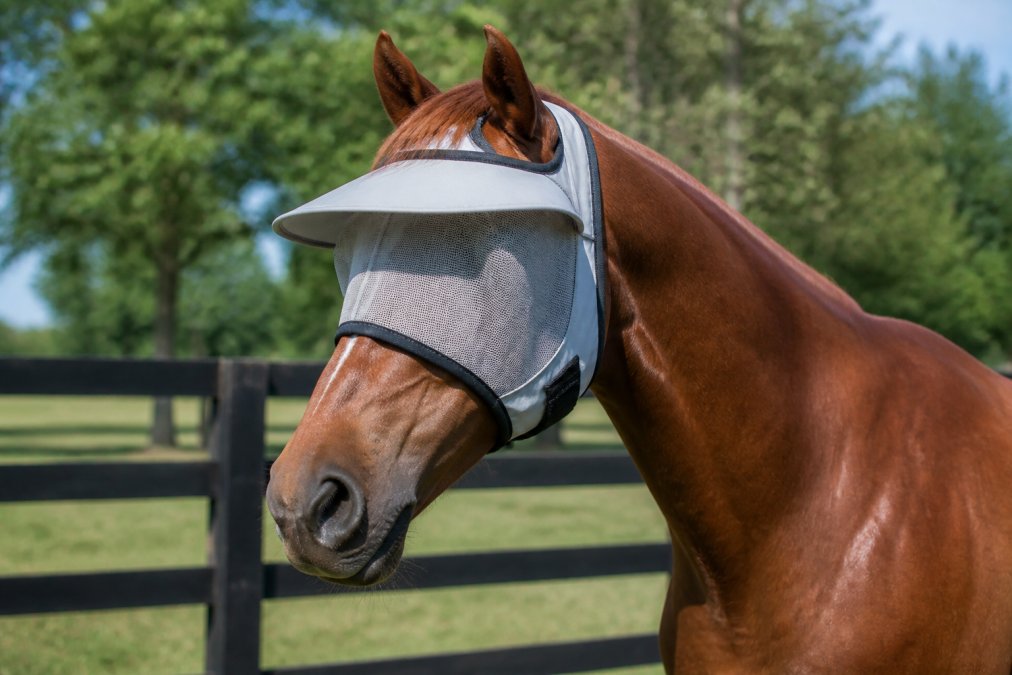
A fly mask with UV protection is the single most effective daily barrier against the sunlight, dust, and insects that trigger flare-ups in uveitis-prone horses, blocking UV radiation that aggravates an inflamed eye while keeping flies off the face.
Key Features to Look For in a UV Fly Mask
Not all masks are built the same. When you're protecting an already sensitive eye, the details matter.
- UV-blocking visor: Look for a built-in visor that shades the eye and reduces glare. TUFFTEQ masks offer up to 95% UV eye protection through high-grade nylon and mesh construction.
- Mesh density: Dense enough to block flies and gnats, breathable enough to prevent heat buildup.
- Eye clearance: A reinforced, structured eye panel keeps fabric off the cornea, which matters enormously for a horse with an active flare-up.
- Secure fit: Adjustable closures that stay put during turnout. A mask that shifts or collapses inward can rub the eye and cause more harm than good.
- Size range: Broader head shapes need dedicated sizing. TUFFTEQ builds plus-size and cob/large pony fits for exactly this reason.
Pro TipCheck the eye clearance on any mask before turnout. Press the fabric gently inward toward where the eye sits. If it touches, the mask will rub against a cornea that's already inflamed.
Equine Recurrent Uveitis Management: A Daily Care Framework
Equine recurrent uveitis management works best as a consistent daily routine rather than a reaction to flare-ups; horses on a structured schedule tend to have longer gaps between episodes. The framework below folds in the piece most guides skip: how to medicate and monitor an eye already behind a mask.

Time of Day |
Action |
Why It Matters |
|---|---|---|
Morning |
Apply UV fly mask before turnout |
Blocks peak daylight hours |
Midday |
Quick visual check of both eyes through the mesh |
Catches tearing or squinting early without removing gear |
Afternoon |
Remove mask, inspect for rubbing |
Prevents pressure sores and hair loss |
Evening |
Clean face, check for flies, administer prescribed drops |
Reduces overnight irritation and keeps medication on schedule |
Night |
Apply nighttime protection if needed |
Manages insects active after dark |
Applying Eye Drops While Your Horse Wears a Mask
This is the step most owners get wrong, and it determines whether topical medication reaches the eye. A mask that stays on all day is fine for UV and fly protection, but it has to come off, or move out of the way, for every dose.

A workable sequence:
- Halve the mask first. Unbuckle the lower strap and fold the mask up over the poll rather than pulling it off. This keeps the horse calmer and the mask out of the dirt.
- Restrain safely. A halter and a second person at the shoulder is enough for most horses. Never wrap an arm around the head of a horse with an active flare-up, a painful eye can trigger a violent head toss.
- Wash your hands and warm the bottle. Cold drops sting. Roll the bottle between your palms for 30 seconds before administering.
- Rest the heel of your hand on the horse's cheekbone, not the eyelid, and use the thumb to gently part the upper lid. This gives you a stable brace if the horse moves.
- Aim for the upper corner of the eye, not the center of the cornea. One drop is enough; a second just runs down the face.
- Do not touch the dropper tip to the eye, lashes, or skin. Contaminated tips commonly cause repeat infection in horses on long-term therapy.
- Wait 60 seconds before replacing the mask. This lets the drop absorb and keeps the mesh from wicking medication off the eye.
Pro TipKeep a dedicated pair of nitrile gloves and a small bottle of saline in your grooming kit. If a drop lands on the mask instead of the eye, rinse the mesh with saline and let it air dry before the next dose, dried medication residue stiffens the fabric and can rub the cornea.
What to Log Beyond Symptoms
A flare-up log that only records dates and symptoms is half a record. Add three columns your veterinarian will use:
- Which eye, left, right, or both. Bilateral episodes change the diagnostic picture.
- Medication given and time, dose count and clock time, not just "morning and night."
- Mask hours, how many hours the mask was on that day. This is the variable you control, and it is the one that shows whether your protection strategy is working.
How to Protect Horse Eyes from Uveitis with Environmental Changes
Shade and fly control do as much work as any piece of gear. A horse that spends daylight hours in direct sun is fighting a losing battle. But the environment includes the gear itself, the material a mask is built from determines how well it performs in heat, dust, and glare.
Practical changes that help:
- Provide run-in sheds. A shaded structure gives horses a place to escape peak UV without being stalled. Orient the opening away from the afternoon sun.
- Time turnout around daylight hours. Turn out early morning or late afternoon when the sun sits lower. UV intensity peaks roughly between 10 a.m. and 4 p.m. in most of the country, avoid that window when a horse is actively flaring.
- Manage manure and standing water. Both breed flies. Remove manure daily and eliminate stagnant water sources, old tires, clogged gutters, and water troughs not scrubbed weekly.
- Use fly predators or traps. Reduce the overall fly population rather than just repelling them from the face. Predators work best when introduced early in the season and when neighboring properties also manage manure.
- Keep pasture edges mowed. Tall grass harbors flies and irritates eyes as horses graze through it.
- Watch the dust. A dry, windy paddock throws grit into the mesh, and grit against an inflamed eye is its own irritant. A stock tank or a light hose-down before peak wind hours reduces airborne dust.
Watch OutStalling a horse in a dark barn all day is not the answer. Lack of airflow and ammonia buildup from bedding irritates eyes just as badly as UV exposure. Shade management means ventilation plus cover, not confinement.
Mesh vs. Rigid Visor: What the Material Actually Does
Most guides tell you to buy a mask with UV protection and stop there. The material inside that mask separates gear that helps from gear that traps heat and fogs the eye.
TUFFTEQ 100% UV Eye Protection – Horse →

Fine mesh (nylon or polyester):
- Airflow: High. Mesh moves air with every head movement, which matters in summer heat.
- UV blocking: Depends entirely on weave density and any added coating. A loose mesh blocks far less UV than a tight one, even if both are labeled "UV."
- Visibility: Good in daylight. Mesh can reduce contrast in low light, which is a real consideration for a horse with compromised vision.
- Durability: Moderate. Mesh stretches, snags on fence wire, and loses shape over a season.
- Best for: Turnout in hot climates and horses that tolerate gear well.
Rigid visor or molded eye cup:
- Airflow: Lower. A solid shell holds heat and can fog or trap moisture against the face.
- UV blocking: High and consistent, because the shell itself is opaque to UV regardless of weave.
- Visibility: Excellent forward vision, but peripheral vision is reduced by the shell edge.
- Durability: High. Holds shape, resists rubbing, and keeps fabric off the cornea even when the horse rolls.
- Best for: Horses with an active flare-up, horses that rub, and horses whose mesh masks collapse inward.
Key TakeawayBefore you buy, press the eye panel inward with your thumb. If it springs back and stays off the eye, it will do the same on a moving horse. If it stays dented, it will rub a cornea the first time your horse rolls.
Cleaning and Maintenance Protocols for Eye Protection Gear
A dirty mask is worse than no mask. Dust, sweat, and fly residue build up in the mesh and press against the eye, causing the exact irritation you're trying to prevent.
Build a cleaning routine:
- Daily: Wipe the outer mesh with a damp cloth to remove dust and fly spots.
- Every 3-5 days: Hand wash in lukewarm water with a mild, fragrance-free soap.
- Weekly: Inspect seams, straps, and the visor for wear or fraying.
- After every wash: Air dry completely before the mask goes back on. Damp fabric against skin causes hair loss and fungal issues.
Nighttime Management Strategies for Uveitis-Prone Horses
Flies don't clock out at sunset. Many species stay active into the evening, and a horse with no nighttime protection can still get bitten around the eyes.
Options that work after dark:
- Lightweight mesh masks that stay on overnight for insect protection without UV function.
- Fly sheets with neck covers to reduce overall insect landing zones.
- Stable fans to keep air moving and flies off the face.
- Topical fly repellents applied around, never in, the eye area.
When to Call Your Veterinarian
Call your veterinarian immediately if you see a cloudy cornea, a closed eye that won't open, or any sudden change in vision. These are emergencies, not wait-and-see situations.
Signs that warrant an immediate call:
- Cloudy or blue-tinged eye
- Eye held shut for more than a few hours
- Visible swelling or discharge that changes color
- Head pressing or circling
- Any sign of eye trauma
Frequently Asked Questions
How long can you ride a horse with uveitis?
Many horses with uveitis can still be ridden, but duration depends on flare-ups and light sensitivity. During active inflammation, rest is best. Once controlled, short rides in low-light conditions with a UV-protective visor attached to the bridle help minimize glare. Monitor for squinting or headshaking, and stop if signs appear. Always follow your veterinarian's guidance on exercise tolerance.
What triggers uveitis flare-ups in horses?
Common triggers include UV light, flies and insects, dust, wind, and stress. Leptospira bacteria and other infections can also play a role. For horses with equine recurrent uveitis, even a cloudy day can bring on symptoms because UV rays penetrate cloud cover. Reducing exposure to these triggers through fly masks, shade, and insect control is key to management.
What features should I look for in a fly mask for uveitis?
Look for a mask with UV-blocking material (at least 95% UV protection), a built-in visor to reduce glare, and a secure adjustable fit that stays in place without collapsing inward. Breathable mesh and reinforced eye clearance prevent rubbing. Earless or with-ears options depend on fly pressure. The mask should attach easily to a halter or bridle for riding and recovery.
Are there specific environmental modifications to help a horse with uveitis?
Yes. Provide access to run-in sheds or shade during peak daylight hours (10 a.m. to 4 p.m.). Use fly predators or fans in stalls to reduce insects. Keep dust down by watering arenas. Avoid turnout during high UV index days if possible. These changes, combined with a UV fly mask, lower the cumulative UV and irritant load on your horse's eyes.
Recent Post